Monday, September 11, 2017

Mischling by Affinity Konar


Mischling


I had sworn off any more WWII books.

They are depressing!  They are full of death!!!  Yes, I love history but UGH!

And yet.....

This one fascinated me.  It is not about the war, although the story is very much because of the war.  Do not be scared off by the subject matter that you read on the flap.  This is a gorgeously written story of the bond between sisters, how the mind and heart work together to create hope from nothing, how the worst evil can actually be perpetrated by an unwilling source that can become your savior if you can survive.  This book was amazing.

Pearl and Stasha are twins at Auschwitz.  Yes, they are two of Mengele's twins.  They experience horrific physical "experiments" and psychological tests that alter their personalities and futures.  The author does not dwell on details, however; you understand most of what happens to the girls but not in excruciating detail or in any detail at all sometimes.  That is not the focus here.  The focus is on their relationship, the aftermath, how they survive, what happens when they are separated and Stasha fears Pearl is dead?  What happened to all the other twins?  And what will happen to them and to Mengele when liberation finally comes?  Two doctors appear to be more upset at what they do than they can let on, and two boys become lifelines for each of the girls on their separate but forever connected paths.

I could not put it down.  Mostly told in alternating perspectives between Stasha and Pearl, you begin to see their different strengths, and how they handle things so differently but towards a similar goal - being together forever, no matter what.  Absolutely beautiful.  Horrific subject matter, turned into a deep, searing, easy to read fulfilling novel.  Wow.

Playing with Matches by Carolyn Wall


Playing with Matches: A Novel


Playing with Matches is a great example of good Southern Literature.  Not great southern literature, but very good.  Wall gets the voice of growing up poor, different, and feeling abandoned in rural Mississippi.  There is a lot of symbolism here, but it does take a while for the title to catch up to the story.  I really enjoyed the first half of the book describing Clea's childhood; the second part of the book when she is grown and facing her demons by coming back home in a time of great need is a bit confusing at first, but well worth the effort. Clea is born of a single, loose woman who promptly turns her baby over to her neighbor, Jerusha, a stern black woman who disapproves of Clea's mom but raises this white baby all the same.  Clea's family becomes blended with Jerusha's sister, Miss Sookie and Sookie's daughter Bitsy, and of course kind "Uncle" Cunny and her best friend, Claudie from down the road.  Yet she still yearns for her mother's acknowledgement. Some things from her unusual childhood and the issues with her mother are never really resolved, but that's life, isn't it??  The characters here are fully fleshed and so real I think I might have met some of them, y'all!  There are several subplots here, and the best one concerns crazy, cursing (as in I curse you!) Miz Millicent and how her backstory suddenly comes out and makes such sense to Clea.  Written in sometimes a dreamlike state, this novel is reminiscent of Wiley Cash and is a great addition to a shelf of southern stories.   Thank you to my friend Karen T for lending me this book; I shall indeed pass it on!!!

Monday, September 4, 2017

Spoonbenders by Daryl Gregory


Spoonbenders

Hilarious!!!!

Give this one a whirl, even if you don't think reading about a "show" family is for you.  The Amazing Telemachus Family were known for their mind reading and telekinesis, until while on live TV they were made out to be frauds - or are they??  Mom definitely has special talents; not sure about Dad and the kids though.  What I really loved about this book was the dialogue.  I have said before that I think dialogue is the hardest thing to get right. But Gregory has it down pat.  It was seamless, real, and full of expression.  You could really hear each character's cadence and voice.  It was fabulously done and made me laugh out loud several times!

Patriarch Teddy is a charmer and holds a deep family secret; his wife Maureen has a job no one knows about and which haunts her family decades later; daughter Irene has one son and can tell when someone is lying; Frankie is still working on his powers but has managed to get himself into debt to the wrong people; Brother Buddy sees the future but refuses to talk; and Matty, Irene's son, is wondering if the family legend has any merit at all when the unthinkable happens to him - proof.  When government agents come sniffing around, along with the man who supposedly debunked the family decades ago, things get crazy.  Well, more crazy than usual since Buddy is building weird things around the house, including a hole in the back yard; Frankie is trying to break into a safe - with his mind; Irene is learning about on-line dating which blocks her ability to detect lies, which is actually a relief to have a "normal" relationship, until he wants to meet face to face; and Matty is 14. Enough said.

A delightful fun read about family and priorities and learning to love yourself - and doing the right thing.  Matty comes out as the most central character here, but Teddy is the anchor to them all.  A great addition to my summer reads!!  Thanks for the recommendation Sally!!!  ;-)

Thursday, August 17, 2017

Hillbilly Elegy by JD Vance


V.I.R.

Very Important Read.


JD Vance might be surprised that he is "old enough" to write a memoir, but anyone who reads his story will be nothing but grateful that he did.


I love that he starts out by saying he did nothing extraordinary in his life.  He went to college, got married, succeeded in business.  But what he states in his prologue and then explains throughout his book is that while he has achieved something that seems ordinary for most Americans, having achieved it considering his childhood experience and family history is indeed extraordinary in that hardly anyone from his hillbilly town in Appalachia ever considered college even possible.   I mean, his Mamaw almost killed a man when she was 12.  She got married as a teenager and his mom is a drug addict.  And that is just the beginning of his family and cultural history.  JD's story is made extraordinary because he was one of a very few that became ordinary - because he came from pretty much nothing. Well, nothing but the fierce determination of his Mamaw and his sister and one very inspiring teacher.

This book is "about a culture that increasingly encourages social decay instead of counteracting it." There are drug addicts, child abusers, lazy workers and welfare moms here, but "there are no villains in this story."  JD loves these people and does not place blame - really not anywhere.  He is simply telling his truth as he lived it.  And THAT is what makes this an important read.

This book is NOT political.  It does NOT serve as the conservative response to Small Great Things or explain why Trump got elected.  Go elsewhere if that is your ulterior motive here.  JD does tell us how a traditionally Democratic culture finally switched to a more Republican based belief system, simply because the programs put in place by the Democrats ended up making situations worse for the people they were trying to help - at least in his experience.

So many quotes I want to share from this book...like "kids (in my youth) don't expect much of themselves because the people around them don't do very much."  And, "poor people don't wear pajamas," (so why do rich people keep donating them? they are an "unnecessary elite indulgence.").

But overall, this is the true story of what is still happening in back woods America.  Yes, you could probably change the race here and it still be a true story, because it does become a story of opportunity and support.  If not for Mamaw, where would JD and his sister be?  If they had married their next door neighbors and never gotten out of Kentucky, they would be stagnant like most of their neighbors.  JD notes that now he looks back and sees that "every single person in my family who has built a successful home married someone from outside our little culture," thereby breaking that cycle. Interesting too is the comment JD makes about meeting and getting to know his future wife's family - he was amazed at the lack of drama in her family!

But what about the people who cannot break out of their cycle?  What about the people who are so dirt poor they cannot leave their dilapidated houses to move to Ohio like JD's grandparents did?  Why was JD able to "get out" and get educated but his Mother never seemed to be able to crawl out of her addictions to drugs, men, and bad news?  (Very interesting that JD never names his mother and is almost detached when he writes of her.  We do not know what her end story is - proving again that no matter what happens or how badly they treat us, these people are fiercely loyal - he is still protecting a woman who abandoned him again and again and once even tried to kill him, because she is family.)  And what will it take for this cycle to change?  Government programs?  Nope, that didn't help JD.  It has to come from within.  He was mostly raised by his hillbilly grandparents.  They stepped up, maybe because their failure with his mother or their inability at the time to steer her right made them determined that JD would not follow that path.  Papaw helped him with his multiplication tables - it wasn't JD's fault he had never been taught them, but thank goodness someone helped him.  Other kids didn't have a Papaw or anyone else who would help them. Mamaw didn't let him get away with anything - her love for him was as fierce as her language (mercy!!).  Most of the kids he grew up with, and even JD himself, are constantly in fight or flight mode - the chemistry in their brains is changed by the constant emotional and sometimes physical stress they endure which is of course different from a child who is secure, safe, and fed.

My point and I think JD's point is this:  HELP MUST COME FROM WITHIN.  From within you, from within your community, from within your family.  The hillbilly people JD knows have no positive role models, they don't see other families building up that college resume or paying for after school sports and getting academic awards (JD admits he learned early on that good grades were for sissies and girls, not for tough boys!  What kind of incentive is that??), they just see teenage pregnancy and menial jobs where it doesn't really matter if you show up because you know you are gonna get fired eventually anyway.  They give up before they try because they don't have goals to strive for.  It is not in their culture.  What exactly are they trying for??  Kids are not exposed to things from "the real world;" JD wasn't stupid, he was just uninformed.  Again, the whole argument of "the uneven geographic distribution of opportunity" comes into play for poor white people in the South, in Appalachia, in the Rust Belt of Ohio - and yes, a similar argument of lack of opportunity is being raised for the lower income African American community as well.  It matters for both of these communities.

JD Vance has written a deep, thought provoking story which happens to be true.  It will open your eyes to the fact that is not just a white story, or a black story, or an immigrant story.  It is an American story that all of us need to stop and pay attention to, and do something about.  Be a role model; connect with a different community than your own; teach or read to kids that have no one to read to them; give jobs not pajamas!   JD says there is no government that can fix these problems for the hillbillies.  It has to start at home. But are the hillbillies tough enough to do what needs to be done to raise up other kids and find opportunities for them like Mamaw did for JD?  Because it comes from within, the winning.


Wednesday, August 16, 2017

The Silent Corner by Dean Koontz

The Silent Corner by Dean Koontz
 
by 

Aug 16, 2017 
it was amazing

First of all, shame on me for not realizing this was the start of a series.

Secondly, hooray, this is a series!!!!!!!!!

Now, I love me some Dean Koontz. This novel/series is a bit a departure for him - my favorite of his novels are the ones steeped in the paranormal. Here Koontz leans more towards science fiction, conspiracy, mystery and a bit of loyalty both to country and family. But, it works - mainly because of Jane.

A strong female lead in this type of novel is rare, so I thoroughly enjoyed this story with a main character that was brave and smart and alone and a GIRL. The story was confusing at first, just as Jane was confused by the sudden (I mean, like, in the middle of dinner) suicide of her loving and happy and stable husband. You share her fear, her tilted world, and her determination to find the truth. So Jane, who happens to be FBI, goes underground. She knows something is fishy here, but keeps hitting roadblocks. Spy novels of old, take note - the new future is here, but you can still go off the grid if you know what you are doing.

(And I loved the explanation for the title of the novel.  Well done.  It bothers me a bit when a title really has no meaning for the story.  But I digress.)

Stay with it  - the confusion starts to clear about half way through (yes, I guessed it but that was ok) and the action picks up tremendously. Jane gets some answers, but I did mention that this is a series, right? So more to come....I can hardly wait!

The Fix by David Baldacci


The Fix by David Baldacci
 
by 

Aug 16, 2017 
really liked it

So often a series begins to wane after the first few books - formulaic, familiar and finite (I am all about alliteration...see what I did there????). But after not really expecting much from this third Amos Decker installment, I was pleasantly surprised!

I LOVED Memory Man (book one). I also enjoyed The Last Mile (book two). So I was thrilled to hear another Amos Decker book was coming out. I really enjoy this character and his "flaws."

The story this time is a bit convoluted, so get ready. Lots of threads in the mystery of why a man shoots a woman in broad daylight and then kills himself when there is no connection to be found between the two people (some reviewers say too many threads). Secrets, espionage, the Hoover building and an imminent threat to the USofA? Decker is on the case with Jamison in tow as usual, but we get a bit more of the human side of Decker in this book I think. Less emphasis on his exacting memory and more on the personal relationships (although he still dashes out of a room with no warning which I think is hilarious, I hope that never changes!!). One arc includes a terminally ill boy and Decker really shows some heart with this kid, very refreshing. Super small hint about the possibility that Decker's memory might fade into normalcy.....hmmmm. And a cameo from Melvin Mars too! Oh! And a reference to To Kill a Mockingbird - loved it!!!

A fun series, I hope it continues but would like to see more of the memory man back if there is a book four, which I am sure there will be!

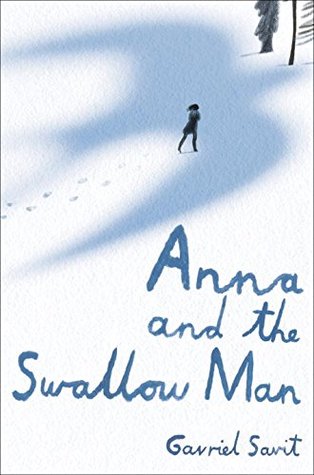
Anna and the Swallow Man by Gavriel Savit


Anna and the Swallow Man
by Gavriel Savit


I just didn't get it.

Beautiful writing, yes.  Plot?  Not really.  Historical times? Definitely.  Parable?  I can only hope.

I may come back to this after my soon to be Godson-In-Law reads it and explains it to me.  (He's a doctoral candidate in Literature.)  But my girlfriend and I read this simultaneously at the beach and we both gasped at the same page, then threw the book across the room at the same page, then were absolutely stunned at the end - and not in a good way.

My main question - WHAT WAS THE POINT????  Young Polish orphan girl leaves her village to follow a strange man in the midst of WWII; they walk in circles for years, avoiding the troops; pick up another strange man along the way, forming a stranger still family unit of sorts; they see horrors and winter in the woods and have no direction; then it ends.  What the what??

And other reviewers are saying this is young adult or juvenile fiction?  Nope.

Wasted day of reading.  On to better stories.  Sorry, bookseller who told me this was the best historical fiction book in his store.  Definitely not a literal take on the times - I think it was more fantasy/allegory - and even then maybe I just wasn't in the mood.....bring on David Baldacci....ahhhhhhhhh!!!!